
Woo Dental Blog
One missing tooth may seem like a small gap, but every tooth plays a role in the balance of your bite. When one disappears, neighboring teeth may gradually shift, chewing pressure can change, and the jawbone in the empty area no longer receives the same stimulation it once did. A single-tooth dental implant is designed to replace both the visible tooth and the support beneath it, creating an independent restoration that does not need to rely on neighboring teeth.
At Woo Dental, dental implants are available for needs ranging from one missing tooth to complete arch restoration. For someone missing a single tooth, implant treatment can provide a fixed, natural-looking solution that restores the open space while helping preserve healthy teeth around it.
What Is a Single-Tooth Dental Implant?
A single-tooth dental implant is a tooth replacement made from several coordinated parts.
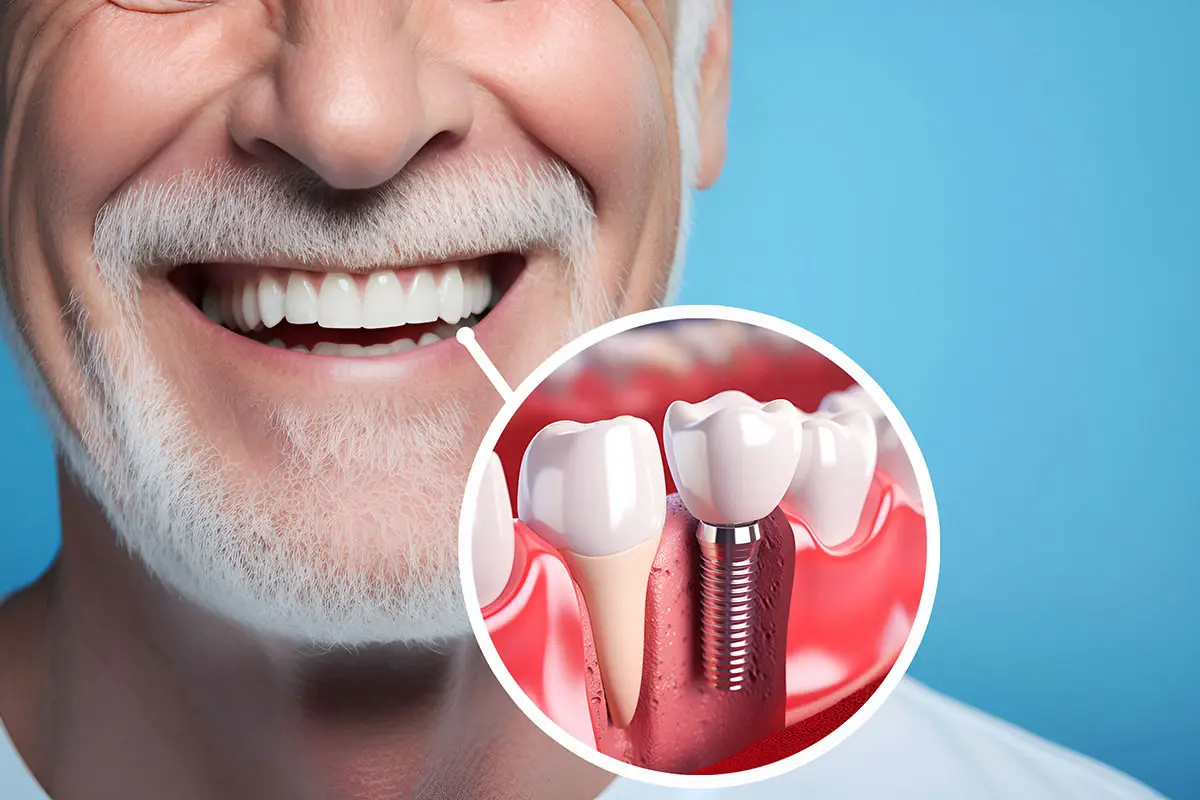
The implant itself is placed within the jawbone and acts as an artificial tooth root. After the implant has achieved the stability needed for restoration, a connector and custom dental crown are used to replace the visible tooth.
Once completed, the restoration functions independently. It does not need to be removed at night, and neighboring natural teeth do not have to serve as the primary anchors for the replacement.
This makes a single-tooth dental implant different from both removable partial dentures and traditional tooth-supported bridges.
Why Replacing One Missing Tooth Matters
Some patients wonder whether replacing a back tooth is necessary if the gap is not obvious when smiling. Appearance is only one part of the decision.
Teeth are arranged to work together. When one disappears, nearby teeth may begin moving into the available space. An opposing tooth may also change position because it no longer meets its normal partner during chewing.
Potential effects of leaving a space untreated may include:
- Shifting neighboring teeth
- Changes in bite alignment
- Food trapping in the open space
- Uneven chewing pressure
- Bone changes where the tooth root used to be
- Greater stress on other teeth
How quickly these changes occur varies. A dental evaluation can help determine whether replacing the missing tooth is recommended and which option best fits the situation.
How a Dental Implant Replaces the Missing Root
Traditional restorations replace the visible portion of a missing tooth, but dental implants also address the space beneath the gumline.
The implant is positioned within the jawbone where the original tooth root once provided support. As healing occurs, the bone forms a stable relationship with the implant surface.
This foundation allows the implant to support the final crown without depending on the adjacent teeth.
The presence of an implant also transfers functional forces into the surrounding bone, which is one reason implant treatment is often discussed when long-term bone preservation is a priority.
Benefits of “Single-Tooth Dental Implants”
- Independent support: A single-tooth dental implant does not need neighboring natural teeth to serve as the main anchors.
- Natural-looking restoration: The implant crown can be customized for shape, size, and shade.
- Fixed tooth replacement: The finished restoration stays in place during eating, speaking, and sleeping.
- Support for jawbone: The implant transfers functional forces into the area where the natural root was lost.
- Restored chewing function: Replacing the missing space helps rebuild a more complete bite.
- Protection of neighboring teeth: Healthy adjacent teeth may not need to be reshaped solely to support the implant crown.
- Long-term restorative option: With appropriate care and maintenance, an implant can serve as a stable foundation for tooth replacement.
Single-Tooth Dental Implant vs. Traditional Dental Bridge
A traditional bridge and a single-tooth dental implant can both replace one missing tooth, but they use different sources of support.
A conventional bridge generally uses crowns on teeth next to the missing space. Those teeth support an artificial tooth between them.
A single-tooth dental implant stands independently. The adjacent teeth do not need to be used as bridge anchors solely for the purpose of filling the gap.
That distinction may make implant treatment attractive when neighboring teeth are healthy and largely untouched.
On the other hand, if those neighboring teeth already need crowns for separate reasons, a bridge may sometimes be a practical restorative option.
There is no universal choice that is right for every patient. Bone levels, tooth condition, health history, timeline, and personal preferences all matter.
Who May Be a Candidate for a Single-Tooth Dental Implant?
A patient considering implant treatment needs adequate oral and general health to support the procedure and healing process.
Woo Dental evaluates factors such as:
- Available bone
- Gum health
- Condition of neighboring teeth
- Location of the missing tooth
- Bite forces
- Health history
- Smoking or other habits that may affect healing
- Long-term restoration goals
Limited bone does not necessarily end the implant discussion. Bone grafting may sometimes be used to rebuild an area before or along with implant treatment.
What If the Tooth Has Not Been Removed Yet?
Sometimes patients explore a single-tooth dental implant because a damaged tooth can no longer be predictably restored.
When extraction is necessary, implant planning can begin before the tooth is removed. This allows the dental team to consider bone preservation, implant positioning, and temporary tooth replacement as part of one coordinated plan.
In selected cases, an implant may be placed during the same general treatment phase as the extraction. In other situations, the site may need time to heal first.
The correct approach depends on infection, bone condition, tooth location, and implant stability.
What Is the Single-Tooth Implant Process?
The process begins with a consultation and imaging. Woo Dental evaluates the missing tooth site and surrounding structures to plan implant size and position.
Treatment generally includes several stages.
Implant Placement
The area is numbed, and the implant is carefully positioned within the jawbone. Sedation options may also be discussed depending on patient needs and the procedure.
Healing and Integration
The implant needs time to develop stable support within the bone. The length of this period varies by patient and treatment circumstances.
A temporary tooth may be used when appropriate, particularly when the missing area is visible.
Final Crown
Once the implant is ready, the final crown is created to fit the bite and coordinate with surrounding teeth.
The finished restoration should feel comfortable during chewing and blend naturally within the smile.
How Is an Implant Crown Made to Look Natural?
Replacing a front tooth requires special attention to cosmetic details, but even back teeth benefit from accurate size and shape.
The dental team may consider:
- Shade of surrounding teeth
- Width of the missing space
- Shape of the neighboring teeth
- Gumline position
- Amount of tooth visible while smiling
- The way the crown contacts the opposing tooth
A well-designed implant crown should not stand out as an obviously artificial tooth. The goal is to create a restoration that fits the individual smile.
How Do You Clean a Single-Tooth Dental Implant?
A dental implant cannot develop traditional tooth decay, but the tissues surrounding it still need daily plaque control.
Patients should brush the implant crown and clean between it and neighboring teeth. The exact flossing or interdental technique may vary depending on the shape of the restoration.
Regular professional visits allow Woo Dental to monitor:
- Gum health
- Supporting bone
- The implant crown
- Bite forces
- Neighboring teeth
Dental implant treatment should be viewed as a long-term partnership between professional care and home maintenance.
Can You Get an Implant Years After Losing a Tooth?
Yes, many patients explore implants years after a tooth was removed. However, the jawbone can change after tooth loss, which may influence the treatment plan.
If substantial bone has been lost, grafting may be considered to create a stronger foundation.
Digital and three-dimensional imaging can help the dentist evaluate what is currently available rather than assuming that an older extraction automatically prevents implant treatment.
How Long Does the Entire Process Take?
The timeline is different for every patient. Some cases move efficiently from implant placement to final restoration, while others involve extraction healing, bone grafting, or additional preparation.
Patients should focus less on finding the fastest possible treatment and more on creating a stable result.
A carefully planned implant placed into appropriate bone and restored after proper healing provides a better foundation than rushing simply to meet an arbitrary timeline.
Replace the Missing Tooth Without Asking Neighboring Teeth to Do the Work
One missing tooth can create more changes than its size suggests. Replacing that space can help restore appearance, chewing function, and balance while reducing the opportunity for surrounding teeth to drift.
A single-tooth dental implant offers a unique advantage because it creates its own foundation within the jaw rather than relying primarily on neighboring teeth. For many patients, that makes it an appealing way to restore one missing tooth.
If you are missing a tooth or have been told that one needs to be removed, contact Woo Dental in Jersey City at 472 Central Ave, (551) 298-3878, Woo Dental in Lodi at 2 Memorial Dr #8B, (862) 394-0032, or Woo Dental in Ridgefield at 555 Bergen Blvd, (551) 313-7414 to schedule a consultation and learn whether a single-tooth dental implant is right for you.
Frequently Asked Questions About Single-Tooth Dental Implants
Does a single-tooth implant affect the neighboring teeth?
The implant is independently supported and generally does not require neighboring teeth to be reshaped solely to anchor the replacement crown.
Can I get an implant if the tooth was removed years ago?
Possibly. Bone levels should be evaluated first. If the area has lost significant bone, grafting may sometimes be recommended before implant placement.
Can a single-tooth dental implant be used for a front tooth?
Yes. Dental implants can replace front teeth when anatomy and oral health are appropriate. Cosmetic planning is especially important in visible areas.